
Spot early depeg signals
Identifying a stablecoin depeg before it becomes a systemic crash requires monitoring the divergence between market price and underlying value. When a stablecoin like ResolvUSD dropped to $0.14 in March 2026, the initial warning was not the price itself, but the lag between the oracle valuation and the actual market trade [src-4].
Watch for these three technical indicators to catch the depeg early.
The most critical signal is the gap between the asset’s reported net asset value (NAV) via its oracle and its actual trading price. If the market price adjusts faster than the oracle updates, a depeg is likely imminent. This discrepancy creates an arbitrage window that often precedes a full crash, as seen when apxUSD’s market price diverged from its NAV-based oracle valuation [src-6].

Sudden spikes in redemption requests or a drop in liquidity pools often precede a depeg. Under regulations like the GENIUS Act, stablecoins must be fully backed by safe, liquid assets and redeemable on demand [src-2]. Monitor exchange reserves and on-chain transfer volumes to detect if holders are rushing to exit before the backing assets can cover the demand.
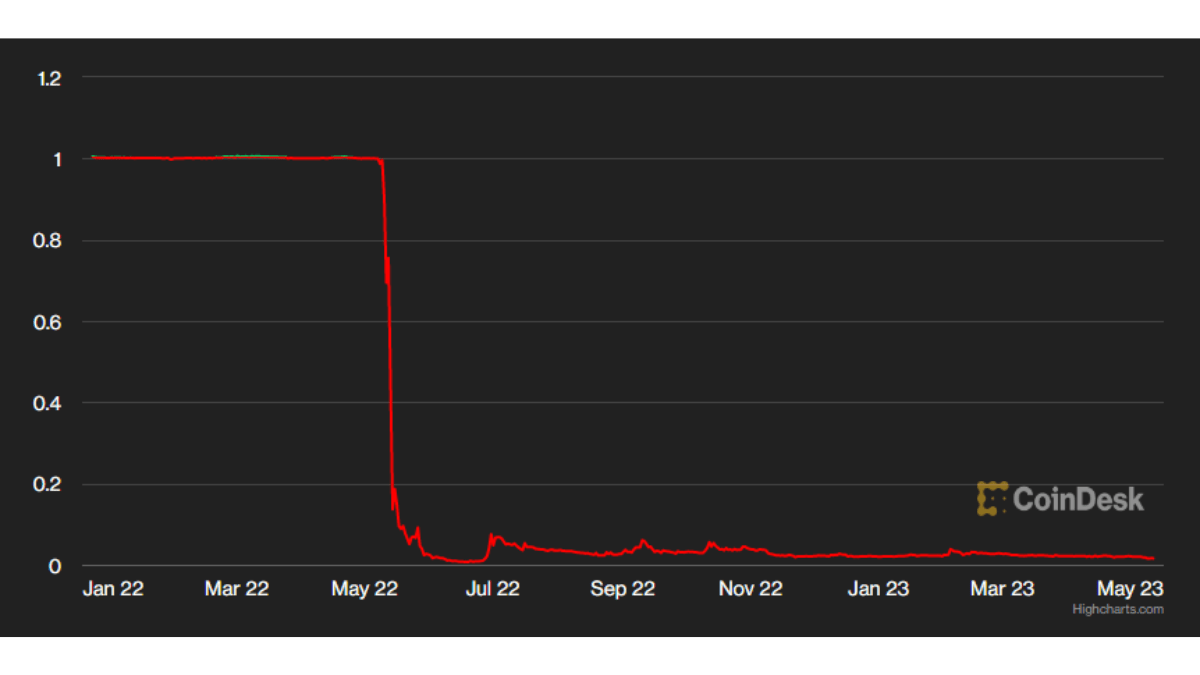
Legal challenges or regulatory scrutiny can trigger immediate loss of confidence. Recent updates from firms like Gibson Dunn highlight how digital asset legal news can impact market stability [src-1]. If a stablecoin issuer faces litigation or regulatory action, the resulting uncertainty can cause a rapid depeg even if the underlying reserves remain intact.
By combining these three signals, you can identify a depeg risk before it becomes a full-blown crisis. Early detection allows you to adjust your risk management strategy and protect your portfolio.
Verify reserve backing and audits
When a stablecoin depegs, the immediate question is whether the issuer can actually redeem the tokens. Distinguishing between temporary liquidity friction and structural insolvency requires verifying the underlying assets. You cannot rely on marketing materials; you must examine the proof of reserves and the rigor of the audit.
Check the attestation frequency and scope
Traditional audits often look at a single snapshot in time, which can mask daily liquidity gaps. The GENIUS Act mandates that stablecoins be fully backed by safe and liquid assets, but verification methods vary. Look for attestation reports that are updated weekly or even daily. A quarterly audit is insufficient for a volatile asset. Check if the attestation covers all reserves or only a portion. If the report excludes certain assets, the backing is incomplete.
Distinguish between attestation and on-chain proof
An attestation from an accounting firm is a legal statement, but on-chain proof is a technical reality. Compare the on-chain balance of the issuer's treasury wallet against the reported reserves. If the on-chain assets are significantly lower than the circulating supply, the token is undercollateralized. Real-time on-chain verification provides immediate transparency, whereas traditional attestation may lag by weeks. Use block explorers to inspect the issuer's treasury addresses directly.
Review the audit firm's reputation
Not all audits are created equal. Some firms perform comprehensive forensic audits, while others only provide limited-scope reviews. Check the auditor's track record with other stablecoins. Did they catch previous irregularities? A reputable auditor will disclose the scope of their review and any limitations. If the audit firm is unknown or has a history of missed issues, treat the attestation with extreme caution.
Monitor the asset composition
The quality of the backing matters as much as the quantity. Safe and liquid assets typically include US Treasuries and cash. However, some issuers include commercial paper or private credit, which are less liquid and harder to value. During a crisis, these assets may not be sellable at face value. Review the reserve report to see the breakdown of asset types. A high proportion of illiquid assets increases the risk of a permanent depeg.
| Verification Type | Typical Frequency | Reliability | Limitations |
|---|---|---|---|
| Traditional Audit | Quarterly | Medium | Snapshot-based; may miss daily gaps |
| Attestation | Monthly/Weekly | High | Legal opinion, not technical proof |
| On-Chain Proof | Real-time | Very High | Only shows on-chain assets; may exclude off-chain reserves |
Look for red flags in the reserve report
Be wary of reserve reports that lack detail or transparency. Common red flags include vague descriptions of assets, missing wallet addresses, or inconsistent numbers between the report and on-chain data. If the issuer refuses to provide full transparency, assume the worst. A legitimate stablecoin issuer will have nothing to hide and will provide clear, accessible reserve data.

As an Amazon Associate, we may earn from qualifying purchases.
Use Depeg Watch tools effectively
Real-time monitoring is the first line of defense against stablecoin depegging events. Platforms like Depeg Watch aggregate on-chain data to flag assets that drift from their pegged value. You can use these tools to track price divergence, monitor liquidity pool health, and review oracle updates for the specific depegged assets 2026 you hold or are considering.
Start by configuring your dashboard to prioritize high-volume stablecoins and major algorithmic tokens. Set custom alerts for deviations exceeding 0.5% from the $1.00 baseline. This threshold catches early slippage before it triggers liquidation cascades or trading halts. Most platforms also display the "depeg duration" metric, which tells you whether the asset is temporarily fluctuating or structurally broken.
Cross-reference the monitoring tool's data with official issuer statements and on-chain explorer activity. A price drop alone does not confirm a depeg; you must verify if the issuer has halted redemptions or if the backing reserves are compromised. For example, recent events like the ResolvUSD (USR) exploit required immediate verification of the smart contract status to understand if the depeg was a liquidity crisis or a total loss of collateral.
Finally, track the "repegging" probability indicators. These metrics analyze trading volume and buy-side pressure to estimate how quickly an asset might return to parity. If the tool shows low volume and widening spreads, assume the depeg is permanent and adjust your risk exposure accordingly. Do not wait for the asset to fully recover; act on the divergence signal while liquidity remains.
Avoid common analysis mistakes
When assessing depegged assets, investors often rely on flawed heuristics that ignore structural realities. The following errors frequently lead to mispriced risk and significant capital loss.
Ignoring regulatory shifts
Market price alone does not reflect legal viability. The GENIUS Act mandates that stablecoins be fully backed by safe and liquid assets and redeemable for fiat [src-serp-2]. Assets that fail to meet these reserve requirements face immediate redemption risks and potential delisting. Relying on historical performance without checking current compliance status is a critical oversight.
Trusting single data sources
Price feeds can lag behind market reality. During the apxUSD depeg, the market price adjusted more quickly than the NAV-based oracle price, creating a dangerous gap between market and oracle valuations [src-serp-6]. Relying on a single oracle or data provider exposes you to manipulation or technical failure. Cross-reference multiple sources to verify true asset value.
Overlooking infrastructure fragility
The digital infrastructure supporting many assets remains fragmented. As noted in recent industry updates, incomplete backend systems can fail under stress [src-serp-3]. Check the transparency of the underlying tech stack and audit reports. If the codebase is opaque or the team is anonymous, the risk of a silent failure is significantly higher.
Neglecting illicit activity signals
High volumes of illicit activity can correlate with unstable assets. Chainalysis data indicates that stablecoins accounted for 84 percent of illicit virtual asset transaction volume in 2025 [src-serp-5]. While not all depegged assets are involved in crime, a high correlation with unhosted wallets and illicit flows can signal poor oversight and higher regulatory scrutiny.
Confusing temporary dips with structural failures
Not every price drop is a depeg. However, distinguishing between a temporary market dip and a structural break requires careful analysis of on-chain data. Look for sustained deviations from the peg and lack of arbitrage opportunities. If the price stays below the peg for more than 24 hours without recovery, treat it as a potential structural failure.
Protect your portfolio from crashes
Depegging events rarely offer time to react once momentum shifts. When a stablecoin loses its peg, liquidity often dries up instantly, as seen when ResolvUSD dropped to $0.14 in March 2026. To survive these crashes, you must treat risk management as a continuous operational discipline rather than a one-time setup.
1. Diversify across issuer types
Concentration risk is the primary driver of catastrophic loss. Do not hold your entire stablecoin allocation in assets issued by a single entity. Spread exposure across issuers with different regulatory frameworks and reserve structures. This ensures that a failure in one protocol or jurisdiction does not wipe out your entire position. Consider balancing regulated issuers against decentralized protocols to mitigate counterparty risk.
2. Monitor on-chain reserves
Relying on quarterly attestation reports is no longer sufficient. Use on-chain analytics to verify that reserves are held in safe, liquid assets. The GENIUS Act mandates full backing, but compliance does not guarantee immediate solvency during a bank run. Check if reserves are composed of cash, short-term treasuries, or higher-risk commercial paper. Assets that are not instantly redeemable can cause slippage during a depeg event.
3. Set automated exit triggers
Emotional decision-making leads to losses during panic selling. Configure automated sell orders or stop-losses at predefined price thresholds, such as $0.98 or $0.95. This removes the need to monitor the market 24/7 and ensures you exit before a minor deviation turns into a total collapse. If you use decentralized exchanges, be aware that oracle prices may lag behind market prices, creating arbitrage opportunities for attackers but leaving retail holders with worse execution.
4. Maintain fiat buffers
The most effective hedge against crypto volatility is holding cash outside the ecosystem. Keep a portion of your net worth in traditional bank accounts or government bonds. This provides liquidity to cover living expenses without forcing you to sell digital assets at the bottom of a crash. It also gives you dry powder to buy quality assets when the dust settles.
5. Understand regulatory shifts
The legal landscape for digital assets is evolving rapidly. Recent updates from firms like Gibson Dunn highlight new compliance requirements that could impact stablecoin issuers. Stay informed about changes in the GENIUS Act or similar legislation that might force issuers to liquidate reserves or change their backing mechanisms. Regulatory actions can trigger sudden depegging events, so having a plan for legal compliance is part of risk management.
No comments yet. Be the first to share your thoughts!