
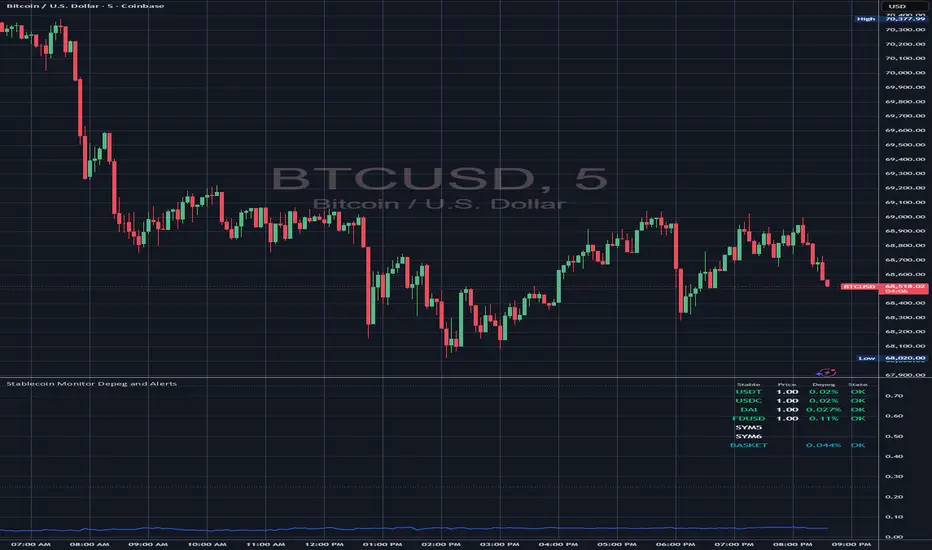
Market snapshot and depeg risks
Stablecoin depegging is a critical risk event where a token loses its 1:1 parity with its reference asset, typically the U.S. dollar. While "stable" implies immutability, the mechanisms maintaining this peg are often fragile under stress. Depegging is rarely a single event but a symptom of underlying mechanical or market failures, ranging from poor liquidity to flawed algorithmic design.
Liquidity and Reserve Mismatch
Even stablecoins backed by real-world assets can break their peg if the market cannot access those reserves quickly enough. This is known as a liquidity mismatch. When investors rush to redeem tokens simultaneously, the issuer may hold assets that are illiquid—such as commercial paper or corporate bonds—that cannot be sold instantly without significant discounts. If the market perceives that the reserves are insufficient to cover all outstanding tokens, panic selling ensues. The stablecoin trades below $1.00 because the cost to exit exceeds the nominal value of the backing assets.
Algorithmic and Hybrid Failures
Algorithmic stablecoins attempt to maintain parity without full collateralization, using code to expand or contract supply based on market demand. These systems are highly sensitive to confidence. If the market believes the algorithm cannot balance supply and demand, a death spiral begins. As the price drops, the system issues more tokens to incentivize holding, which further dilutes value and drives the price down. Even hybrid models, which combine collateral with algorithms, are vulnerable if the algorithmic component fails to absorb volatility.
Market Shocks and Regulatory Pressure
External shocks can trigger depegging events independent of the coin’s internal mechanics. Sudden regulatory announcements, such as bans on stablecoin issuers or restrictions on fiat on-ramps, can cause immediate liquidity withdrawals. Additionally, broader crypto market crashes often lead to "stablecoin flight," where investors sell stablecoins to buy Bitcoin or Ethereum, expecting them to hold value better than fiat-pegged tokens during a downturn. This sudden sell-off can overwhelm the trading pools that stabilize the price.
Monitoring these risks requires watching on-chain liquidity metrics and reserve audits rather than just the token price. A stablecoin trading at $0.99 with deep liquidity is fundamentally different from one trading at $0.95 with thin order books. The latter signals an imminent loss of peg.
Comparing stablecoin models
Evaluating stablecoin models requires separating must-have requirements from nice-to-have features. A practical choice should survive normal use, maintenance, timing, and budget. If a recommendation only works in an ideal situation, call that out plainly and provide a fallback path.
| Factor | What to check | Why it matters |
|---|---|---|
| Fit | Match the option to the primary use case. | A good deal still fails if it does not fit the job. |
| Condition | Verify age, wear, and service history. | Hidden condition issues erase upfront savings. |
| Cost | Compare purchase price with likely upkeep. | The cheapest option is not always the lowest-cost option. |
Regulatory impact on parity
Regulatory clarity is a primary determinant of stablecoin stability. When regulators define how reserves must be held and audited, issuers are forced to maintain higher liquidity buffers, reducing the likelihood of a depeg event. Conversely, regulatory uncertainty can cause issuers to hoard liquidity defensively, reducing market efficiency. Investors should monitor legislative developments in key jurisdictions like the US, EU, and Asia, as these often precede major market shifts.
Monitoring tools and signals
Effective monitoring goes beyond price charts. Investors should track on-chain liquidity metrics, reserve audit reports, and social sentiment. A stablecoin trading at $0.99 with deep liquidity is fundamentally different from one trading at $0.95 with thin order books. The latter signals an imminent loss of peg. Use the following technical chart to visualize historical volatility and liquidity depth.
By combining fundamental analysis of reserve quality with technical monitoring of liquidity, investors can better anticipate and mitigate the risks associated with stablecoin depegging.
No comments yet. Be the first to share your thoughts!