5 Depeg Watch 2026: Top 5 Stablecoins at Risk of Decoupling
As the 2026 regulatory landscape tightens, maintaining peg stability has become the primary stress test for major stablecoins. This section monitors five specific assets for early signs of decoupling, relying on official reserve attestations and regulatory filings to identify vulnerabilities. Treat these alerts as data points for your own due diligence, not as financial advice.
1. USDT: Liquidity Depth vs. Reserve Transparency
Tether remains the liquidity backbone of crypto markets, yet its reserve composition invites scrutiny. While massive trading volume provides a buffer against minor shocks, the lack of granular, real-time transparency on commercial paper holdings creates uncertainty. Traders monitor on-chain flows closely, treating USDT as a high-liquidity tool that requires constant vigilance regarding its backing assets and potential depeg risks during extreme volatility.
2. USDC: Regulatory Clarity and Circle Reserves
USD Coin distinguishes itself through strict regulatory compliance and full backing by short-term U.S. Treasuries. Circle’s regular attestation reports provide a layer of accountability that appeals to institutional investors wary of opaque reserves. However, its deep ties to U.S. financial infrastructure mean it remains vulnerable to sudden regulatory shifts or banking partner disruptions, making it a stable but politically sensitive choice for 2026 portfolios.

3. DAI: Algorithmic Mechanics and Collateral Risk
MakerDAO’s DAI relies on a complex web of crypto-collateralized debt positions rather than fiat reserves. This decentralized model offers censorship resistance but introduces smart contract and liquidation cascade risks. During market downturns, the value of underlying collateral like ETH can plummet, forcing rapid liquidations that threaten the peg. Users must actively monitor collateralization ratios and governance decisions to mitigate these inherent algorithmic vulnerabilities.

4. BUSD: Regulatory Shutdown and Market Exit
Binance USD faced an abrupt halt in minting due to regulatory pressure from New York’s DFS, effectively freezing its growth and pushing users toward alternatives. While existing BUSD tokens remain redeemable, the loss of active issuance has diminished its liquidity and utility significantly. Investors should view BUSD as a legacy asset with diminishing relevance, prioritizing active stablecoins with clearer regulatory standing for 2026 trading.
5. Algorithmic Tokens: High-Risk Depeg 2026 Candidates
Algorithmic stablecoins without full collateral backing remain the most fragile link in the stablecoin ecosystem. These tokens rely on market confidence and incentive mechanisms to maintain parity, making them prone to death spirals during loss of faith. Despite past failures, new variants continue to emerge, offering high yields but carrying existential depeg risks that demand extreme caution and thorough due diligence before any allocation.

Depeg Watch 2026: Current Market Stress
The stablecoin landscape in 2026 is defined by a fragile equilibrium. While most major tokens maintain their pegs, the margin for error has narrowed significantly. This environment requires a clear distinction between two types of price deviation: temporary slippage and structural failure. Understanding this difference is the first step in identifying which assets are actually at risk.
Temporary slippage is a market mechanic. It happens when buy and sell orders are temporarily unbalanced, causing the price to dip below or rise above $1.00. In healthy markets, arbitrageurs quickly step in to correct these deviations, restoring parity within minutes or hours. This is noise, not signal. It reflects trading volume, not trust.
Structural failure, however, is a symptom of deeper issues. It occurs when the market loses confidence in a stablecoin’s ability to maintain its peg. This can stem from reserve transparency gaps, regulatory scrutiny, or liquidity shortages. Unlike slippage, structural depegs do not self-correct. They require intervention, and often, they lead to permanent value loss for holders. In 2026, the stakes are higher because regulatory bodies are actively monitoring reserve compositions, making opacity a critical risk factor.
The current market stress is not uniform. Some stablecoins face pressure due to geopolitical tensions affecting their reserve assets, while others struggle with technological vulnerabilities in their smart contracts. This section of the Depeg Watch focuses on identifying these specific stress points, separating transient market noise from genuine threats to stability.
For a deeper understanding of the mechanics behind these events, refer to Chainlink’s guide on stablecoin depeg causes, which outlines the primary drivers of parity loss.
Depeg Watch Alerts: Monitoring Tools and Indicators
Relying on a single price feed is like watching a single rearview mirror while driving blindfolded. To catch a stablecoin depeg early, you need a system that tracks reserves, on-chain velocity, and market volatility simultaneously. Webacy’s Stablecoin Depeg Risk Monitor exemplifies this approach by combining FX-aware scoring with volatility detection to provide real-time intelligence. This type of tool flags risks before they become liquidity crises.
Beyond specialized risk platforms, standard on-chain analytics offer immediate signals. Look for sudden spikes in stablecoin outflows from centralized exchanges, which often precede depegging events. Monitoring the difference between the stablecoin’s market price and its underlying reserve value can also reveal stress points. These indicators act as your early warning system, giving you time to react before a depeg becomes irreversible.


As an Amazon Associate, we may earn from qualifying purchases.
What Happens When a Stablecoin Depegs?
What Happens When a Stablecoin Depegs?
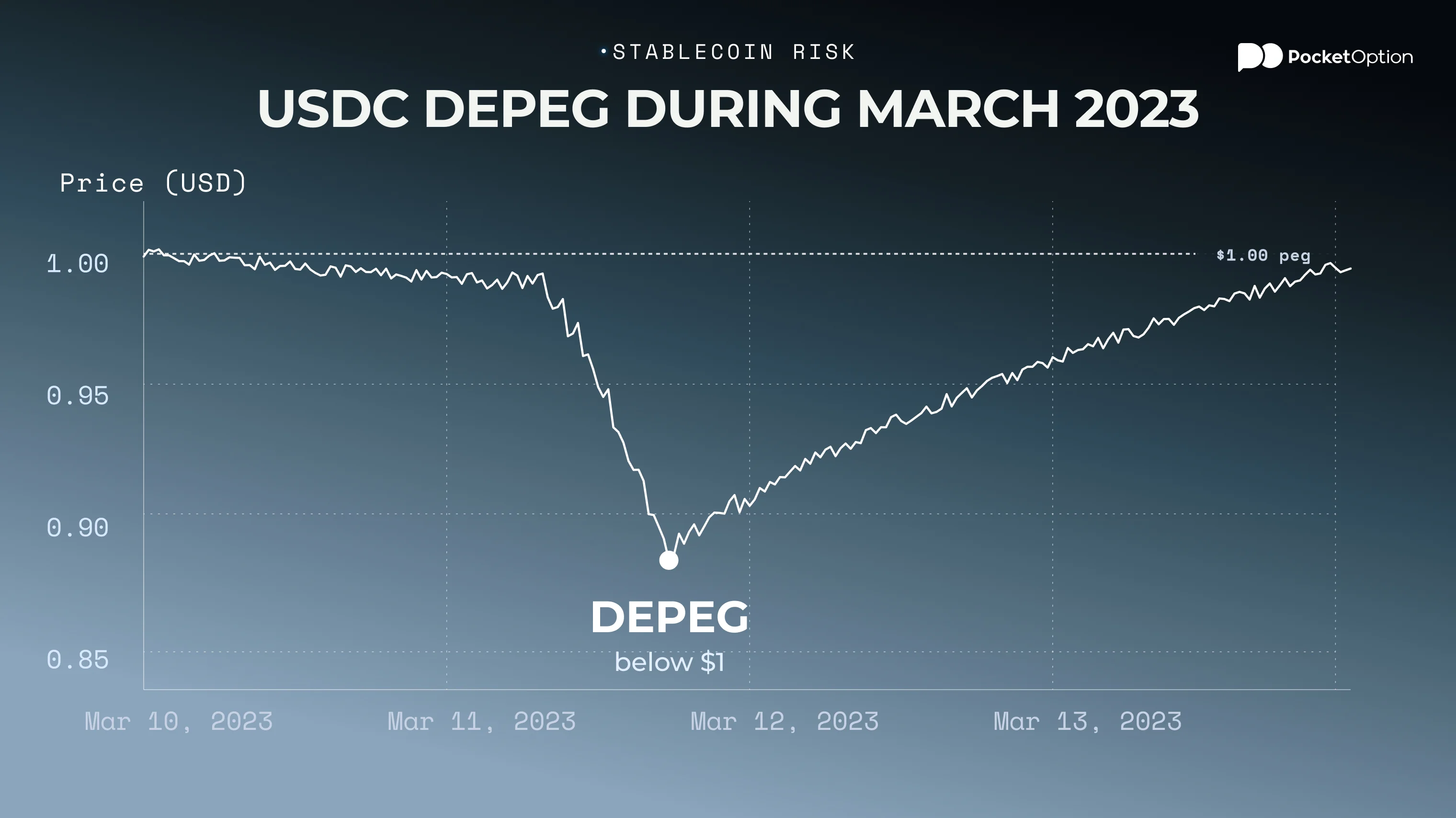
When a stablecoin like USDT or USDC drops below $1.00, it triggers immediate liquidity stress. Holders face rapid value erosion as panic selling drives the price further down, turning a supposed safe harbor into a volatile asset. This decoupling often forces exchanges to halt withdrawals, freezing funds while the issuer attempts to restore parity through reserve audits or emergency liquidity injections.
The broader market feels the shockwave instantly. Since stablecoins serve as the primary trading pair for most cryptocurrencies, a depeg event causes widespread sell-offs across Bitcoin and Ethereum. Traders rush to exit positions, leading to correlated price drops and heightened volatility across the entire crypto ecosystem, regardless of the underlying asset's fundamentals.
No comments yet. Be the first to share your thoughts!