
Why depeg risk matters in 2026
Stablecoin stability has shifted from a question of reserve adequacy to one of structural complexity. While major fiat-backed issuers have largely addressed the liquidity shocks seen in 2023, new vulnerabilities have emerged that require closer scrutiny. The primary focus for 2026 is no longer just about holding cash, but about how algorithmic mechanisms and Real World Asset (RWA) backing interact under stress.
The 2023 banking crisis exposed how quickly fiat-backed tokens could face temporary depegs when reserve custodians fail. USDC’s brief loss of parity following the Silicon Valley Bank collapse demonstrated that even well-capitalized issuers are not immune to traditional financial contagion. However, the more pressing concern for 2026 lies in the growing market share of algorithmic and RWA-collateralized tokens, which lack the simple liquidity buffers of direct bank deposits.
Algorithmic stablecoins rely on code and incentives rather than tangible assets to maintain their peg. If market sentiment shifts or arbitrageurs withdraw, these systems can experience rapid, self-reinforcing depegs. Similarly, RWA-backed tokens introduce credit risk and legal complexity. If the underlying assets—such as private credit or treasury bills—become illiquid or face legal challenges, the stablecoin’s value may decouple from the dollar.
The Bank Policy Institute has flagged these structural risks as warning bells for the broader financial system. A depeg event in this new landscape does not just affect crypto traders; it can trigger losses for retail users and disrupt decentralized finance (DeFi) protocols that rely on stablecoins for settlement. As the market matures, the definition of "stable" must account for these deeper, more opaque risks.
Algorithmic models face renewed scrutiny
Algorithmic stablecoins have long operated on the premise that code can replace collateral, relying on self-correcting mechanisms to maintain a 1:1 peg with fiat currencies. This model promises capital efficiency by eliminating the need for traditional reserve assets. However, the theoretical elegance of these systems often collapses under the pressure of extreme market volatility, where the feedback loops intended to stabilize price instead accelerate devaluation.
Recent academic research reinforces this skepticism. A 2024 study published in Research in International Business and Finance analyzed prediction factors for stablecoin depegging, identifying that algorithmic models exhibit distinct vulnerability patterns compared to collateralized alternatives. The research highlights that these systems are particularly susceptible to "death spirals"—a scenario where the algorithmic token loses value, triggering automated sell-offs that further depress the price, ultimately breaking the peg. This data-driven analysis confirms that algorithmic stability is not a static state but a fragile equilibrium requiring constant, perfect market conditions.
The broader financial market remains cautious following high-profile failures in previous cycles. While regulatory bodies like the FATF have focused heavily on asset-backed stablecoins, the structural risks of algorithmic designs persist. Unlike fiat-backed tokens that rely on reserve quality, algorithmic tokens rely on market confidence in their rebalancing mechanics. When that confidence wavers, the lack of tangible backing means there is no floor to stop the decline. As the industry moves toward 2026, investors and regulators alike are treating algorithmic models with heightened caution, viewing them as inherently riskier than their collateralized counterparts.
RWA backing introduces reserve opacity
Real-world asset (RWA) backing shifts the depeg risk profile from simple cash management to complex liquidity and valuation challenges. Unlike fully cash-backed stablecoins that hold liquid reserves, RWA-backed tokens often rely on non-cash assets such as private credit, real estate, or tokenized securities. This structural difference creates a significant opacity gap between the stated backing and the actual liquidity available during a crisis.
The primary vulnerability lies in liquidity mismatches. Non-cash reserves are typically illiquid, meaning they cannot be quickly converted into cash to meet redemption demands. If a stablecoin faces a sudden surge in withdrawals, the issuer may be forced to sell these assets at a steep discount or delay redemptions entirely. This delay can trigger a loss of confidence, causing the token to trade below its peg even if the underlying assets are fundamentally sound.
Valuation complexity further exacerbates this risk. Unlike public equities or government bonds, many RWA holdings lack transparent, real-time pricing. This makes it difficult for users and regulators to assess the true value of the reserves. As noted in recent industry analyses, the lack of standardized reporting on these complex assets makes it hard to verify solvency during market stress.
The March 2026 FATF report highlights this opacity as a key area for regulatory scrutiny. The report emphasizes that the lack of transparency in RWA-backed reserves makes it difficult to assess systemic risk. Without clear, standardized reporting, investors cannot easily distinguish between stablecoins with robust backing and those with opaque, illiquid reserves.
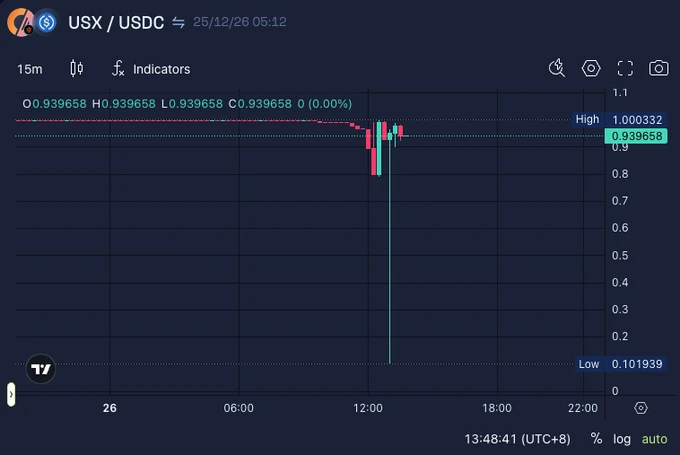
The USX depeg event serves as a cautionary example. When liquidity drained from the Solana-based stablecoin, the lack of immediate cash backing led to a rapid drop in value. This event underscores the importance of maintaining sufficient liquid reserves, even when RWA backing is present. Without this buffer, the complexity of the backing becomes a liability rather than an asset.
Regulators are increasingly focused on these vulnerabilities. The Bank Policy Institute has warned that the opacity of RWA-backed reserves could lead to significant losses for retail holders if a depeg event occurs. Their analysis suggests that without stricter transparency requirements, the market may struggle to accurately price the risk associated with these tokens.
Ultimately, RWA backing adds a layer of complexity that can either strengthen or weaken a stablecoin’s resilience. When managed with transparent, liquid reserves, it can provide diversification. However, when opaque or illiquid, it introduces significant depeg risks that are difficult to mitigate during market stress.
New monitoring tools track stress signals
The data gap that allowed algorithmic and RWA stablecoins to hide vulnerabilities is narrowing. In January 2026, Webacy publicly launched its Depeg Risk Monitor, a real-time intelligence system designed to detect early signs of instability. Unlike traditional metrics that only look at price deviation, this tool uses FX-aware scoring to analyze the underlying reserve quality and liquidity conditions.
These specialized monitors address a critical weakness in the current market: the lag between a reserve stress event and public awareness. By combining volatility detection with real-time on-chain data, they provide a more granular view of risk than simple price charts. This shift from reactive price tracking to proactive stress detection is essential for identifying algorithmic failures before they cascade.
The emergence of these tools reflects a broader industry response to past failures. Following the 2023 USDC depeg, which was triggered by reserve issues at Silicon Valley Bank, market participants have demanded better transparency. New monitoring solutions aim to provide the infrastructure needed to accurately track asset valuations and reserve health onchain, reducing the information asymmetry that often benefits bad actors.
Global regulatory pressure tightens
Compliance costs and operational friction are rising as jurisdictions align on stablecoin oversight. The Financial Action Task Force (FATF) released a targeted report on March 3, 2026, detailing how illicit finance actors exploit stablecoins and unhosted wallets to move value across borders. This guidance pushes national regulators to enforce stricter identity verification and transaction monitoring standards.
The report highlights that the anonymity of unhosted wallets creates significant gaps in anti-money laundering (AML) frameworks. When stablecoins bridge traditional finance and decentralized ecosystems, the lack of clear custodial responsibility makes it difficult to trace fund flows. Regulators are responding by demanding that issuers implement more robust travel rule compliance, requiring sender and receiver data for transactions above specific thresholds.
These regulatory shifts directly impact algorithmic and RWA-backed stablecoins. Projects relying on opaque reserve structures or decentralized governance models face higher scrutiny. Compliance is no longer optional for market access; it is a structural requirement for stability. Issuers that cannot prove the legitimacy of their backing assets or monitor their on-chain distribution may face delisting from regulated exchanges or operational bans in key markets.
The FATF’s March 2026 report Targeted report on Stablecoins and Unhosted Wallets serves as a benchmark for future national laws. It signals that the era of self-regulation in the stablecoin space is ending. Market participants must now account for regulatory risk as a primary factor in assessing depeg potential, alongside technical and economic vulnerabilities.
Checklist for assessing stablecoin safety
Evaluating depeg risk requires moving beyond the promise of a 1:1 peg. The 2026 regulatory landscape, including the March 2026 FATF report, emphasizes reserve transparency and liquidity stress testing. Use this framework to assess the structural integrity of any stablecoin before holding it.
- Verify Reserve Composition: Check if reserves are held in short-term U.S. Treasuries or cash. Avoid coins with significant exposure to corporate bonds or private credit, which carry higher default risk during market stress.
- Audit Frequency and Quality: Look for monthly attestations by independent, reputable firms. Quarterly or annual reports are insufficient for detecting rapid reserve depletion.
- Smart Contract Security: Ensure the protocol has undergone recent third-party audits. Unaudited code is a primary vector for exploits that can cause instant depegging.
- Redemption Mechanism: Confirm that users can redeem 1:1 for fiat directly with the issuer. If redemption is restricted to secondary markets, the peg is not guaranteed.
- Regulatory Compliance: Check if the issuer is registered as a Money Services Business (MSB) in key jurisdictions. Compliance reduces the risk of sudden regulatory shutdowns.
Stablecoin depeg mechanics and history
A stablecoin depeg occurs when a token loses its 1:1 parity with its underlying asset, such as the U.S. dollar. These events trigger severe market disruptions, requiring reliable data infrastructure to accurately track asset valuations onchain. Stablecoins remain a foundational component of decentralized finance, but their stability is not guaranteed.
No comments yet. Be the first to share your thoughts!