
How algorithmic stablecoins work in 2026
The term "algorithmic stablecoin" has evolved significantly since the 2022 collapse of TerraUSD (UST). While early iterations relied on pure code-based arbitrage—using a volatile secondary token to absorb peg shocks—modern algorithmic stablecoins in 2026 are predominantly hybrid models. They combine smart contract mechanisms with partial collateral reserves, a structural shift driven by regulatory pressure and the need for resilience against market volatility.
Purely algorithmic designs, which maintain a $1 peg without direct asset backing, are now considered high-risk and largely excluded from regulated finance. Instead, protocols like DAI and Frax v2 use a mix of crypto-collateral (such as ETH or BTC) and algorithmic seigniorage shares to stabilize value. This hybrid approach provides a buffer against depegging events that previously destroyed significant capital, as seen with the Terra ecosystem.
The primary mechanism for these hybrids is often a fractional-algorithmic model. When the stablecoin trades above $1, the protocol incentivizes users to mint new tokens by issuing a secondary governance token. When it trades below $1, the protocol uses collateral reserves to buy back and burn the stablecoin, or incentivizes redemption of the underlying collateral. This creates a self-correcting loop that relies less on speculative demand and more on tangible asset backing.
This evolution marks a departure from the "pure play" experiments of the early 2020s. Today’s algorithmic stablecoins are designed to survive market stress by anchoring their value to real assets, even if only partially. The goal is no longer to replace fiat entirely through code alone, but to create a resilient, decentralized payment rail that can withstand the shocks that destroyed earlier models.
DAI, Frax v2, crvUSD, and USDe compared
The 2026 stablecoin landscape has shifted from pure algorithmic experiments to hybrid models that balance decentralization with real-world asset backing. DAI, Frax v2, crvUSD, and USDe represent the four dominant approaches to maintaining a dollar peg. Each protocol employs distinct collateral structures and rebalancing mechanisms, creating different risk profiles for traders and institutions.
Understanding these differences is critical for capital allocation. A protocol relying heavily on volatile crypto collateral faces different depeg risks than one anchored by treasury bills. The following comparison breaks down the mechanical underpinnings of each asset.
| Stablecoin | Peg Mechanism | Primary Collateral | Primary Use Case |
|---|---|---|---|
| DAI | Overcollateralized + Dai Savings Rate | Crypto (ETH, WBTC) + RWA | DeFi lending & trading |
| Frax v2 | Fractional-Algorithmic | USDC + FXS (burn/buy) | DeFi yield & liquidity |
| crvUSD | Overcollateralized (Curve Vaults) | CRV, LP tokens, BTC, ETH | Curve ecosystem leverage |
| USDe | Overcollateralized + Delta-Neutral | BTC, ETH, Stablecoins + Derivatives | Yield-bearing treasury proxy |
DAI remains the most established decentralized stablecoin, relying on MakerDAO's governance to manage its reserve mix. While it has integrated Real-World Assets (RWAs) like U.S. treasuries to improve yield, its core peg stability still depends on the value of its crypto collateral. This makes DAI sensitive to broader crypto market downturns, though the overcollateralization buffer provides significant protection.
Frax v2 introduced a fractional-algorithmic model, splitting its supply between USDC collateral and the FXS governance token. This design aims to reduce capital inefficiency by using less collateral than fully backed models. However, it introduces algorithmic risk: if FXS loses value, the protocol must burn more tokens to maintain the peg, potentially creating a death spiral during severe market stress.
crvUSD is tightly coupled to the Curve Finance ecosystem. It allows users to mint stablecoins against liquidity pool tokens and major assets like BTC and ETH. Its peg mechanism relies on Curve's stableswap infrastructure and the value of its native CRV token. This creates a strong synergy within Curve but limits its adoption outside that specific DeFi vertical.
USDe, issued by Ethena, takes a different approach by using a delta-neutral hedging strategy. It holds crypto collateral while shorting futures to hedge price exposure, generating yield from funding rates. This makes USDe behave more like a yield-bearing treasury product than a traditional stablecoin. While it has maintained its peg effectively, its reliance on continuous positive funding rates creates a unique structural risk if market conditions shift.
Real-World Asset Backing and Regulatory Pressure
The regulatory landscape for stablecoins has shifted from scrutiny to exclusion. In 2026, major financial jurisdictions are no longer debating whether algorithmic models pose a systemic risk; they are actively banning them. New laws explicitly narrow the list of viable models, pushing unbacked or lightly backed algorithmic designs out of the market to protect everyday consumers and institutional investors.
This regulatory crackdown is the primary driver behind the industry’s pivot toward Real-World Asset (RWA) backing. Protocols that previously relied on seigniorage shares or volatile collateral to maintain their peg are now forced to hold high-quality liquid assets, such as U.S. Treasuries, to survive. Without this tangible backing, algorithmic stablecoins face immediate delisting from regulated exchanges and compliance barriers that make them unusable for mainstream business.
The contrast is stark. While pure algorithmic models attempt to manage supply through code alone, the surviving protocols now mirror traditional finance by holding reserves that can be audited and valued in real-time. This shift ensures that even if the algorithmic mechanisms fail, the underlying asset provides a floor for the token’s value. The result is a market where "algorithmic" no longer means "unbacked," but rather "supplemented by hard assets."
The TerraUSD collapse remains the defining case study for regulators. The event wiped out nearly $45 billion in market capitalization in a single week, leading to a total halt of the Terra blockchain and subsequent bankruptcy filings. This disaster directly informed the strict reserve requirements now codified in legislation across the EU, the US, and parts of Asia. Regulators now view unbacked algorithmic tokens not as innovative financial instruments, but as unregulated securities that threaten financial stability.
For builders and investors, this means the era of purely code-based pegs is effectively over in regulated markets. Survival now depends on transparency and collateral quality. Protocols that fail to integrate RWA backing into their core architecture will find themselves isolated in unregulated offshore markets, unable to access the liquidity and user base required for long-term viability.
Peg stability and depeg risk analysis
Algorithmic stablecoins operate on a razor’s edge, where trust in code replaces trust in central banks. The 2026 landscape demands a sober assessment of this risk, particularly after the catastrophic failure of TerraUSD (UST) in 2022, which erased nearly $45 billion in market capitalization in a single week. That event exposed the fragility of pure algorithmic models that rely on speculative seigniorage tokens to maintain parity. Today’s designs, such as DAI and Frax, have evolved to include partial collateralization and more robust governance mechanisms, yet the threat of depegging remains a constant variable in the market.
The primary difference between legacy failures and current contenders lies in their collateral structure. DAI, for instance, is backed by a diversified basket of crypto assets and real-world assets, providing a buffer that pure algorithmic tokens lack. Frax employs a fractional-algorithmic model, allowing it to adjust its collateral ratio dynamically based on market conditions. These mechanisms aim to absorb shocks that would otherwise trigger a death spiral. However, they do not eliminate risk; they merely shift it from total collapse to gradual depreciation or liquidity crunches during extreme market volatility.
Monitoring peg stability requires looking beyond headline prices. Real-time data reveals how quickly a stablecoin can return to parity after a dip.
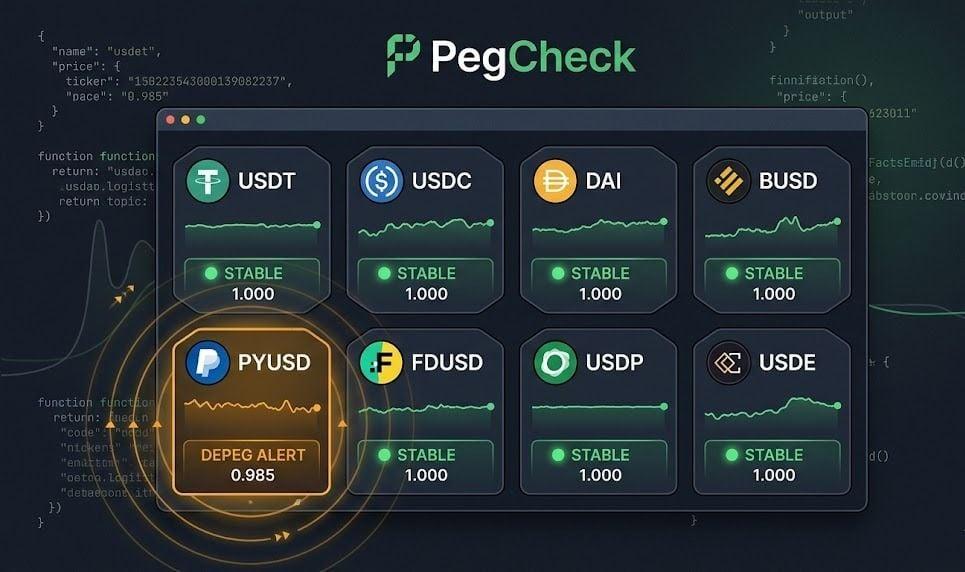
Tools like PegCheck provide critical visibility into these micro-fluctuations, alerting developers and investors to anomalies before they become systemic crises. The ability to detect and respond to these deviations is now a standard requirement for any stablecoin claiming stability in 2026.
To understand the current state of these assets, we must look at their price action over the last six months. The following chart illustrates the resilience of DAI and USDe against broader market trends.
While these charts show relative stability, the underlying risk remains tied to the health of the broader crypto ecosystem. A significant downturn in Bitcoin or Ethereum prices can pressure the collateral backing these stablecoins, testing their algorithmic rebalancing mechanisms. Investors must therefore view peg stability not as a static feature, but as a dynamic outcome of continuous market stress tests.
Choosing the right algorithmic stablecoin
Selecting an algorithmic stablecoin requires matching the token’s specific peg mechanism to your risk tolerance and use case. The market has fragmented into distinct categories: over-collateralized hybrids, semi-elastic rebasing models, and pure crypto-collateralized debt positions. Each offers different trade-offs between yield, decentralization, and stability.
DAI: Stability for DeFi Integration
DAI remains the standard for institutional and high-value DeFi operations. Its transition to a multi-collateral model, backed by US Treasuries and other crypto assets, provides a buffer that pure algorithmic models lack. It is the preferred choice for yield farming and lending protocols where stability is non-negotiable. While its yield is often lower than pure algorithmic peers, its deep liquidity and integration across major chains make it the safest bet for large holdings.
Frax: Yield and Flexibility
Frax’s semi-elastic algorithm allows it to adjust its collateral ratio based on market demand. When demand for FRAX is high, the protocol can reduce collateralization, freeing up capital. This mechanism often results in higher yields for stakers but introduces complexity. Frax is suitable for users comfortable with active risk management who seek higher returns than DAI offers. It serves as a bridge between fully fiat-backed and fully algorithmic models.
CRVUSD and USDe: Niche Strategies
CRVUSD, built on Curve, leverages the platform’s deep liquidity for stable borrowing. It is ideal for traders already active in the Curve ecosystem, offering low slippage for large swaps. USDe, backed by a diversified portfolio of real-world assets, offers a different risk profile. It appeals to users seeking exposure to traditional finance yields within DeFi. However, these tokens carry higher complexity risks and are best suited for sophisticated investors who understand the underlying collateral structures.
2026 Stablecoin Trends and FAQ
Regulatory pressure is reshaping the landscape, pushing algorithmic and lightly backed designs out of the market while favoring reserve-backed models. Heading into 2026, six forces are moving fastest: regulation, volume, cross-border payments, AI infrastructure, treasury products, and multi-chain architecture. These shifts determine which protocols survive and which face depeg risks.
What are the stablecoin trends for 2026?
New laws can instantly narrow the list of viable models. Builders must prioritize compliance and transparent collateralization over pure algorithmic expansion. The focus has shifted from speculative growth to sustainable, regulated utility across multiple chains.
What is the best algorithmic stablecoin?
Top algorithmic stablecoins in 2026 include DAI, Frax v2, crvUSD, and USDe. These projects are compared on peg mechanisms, collateral types, use cases, and risk profiles for builders. DAI and Frax remain leaders due to their hybrid approaches that balance decentralization with real-world asset backing.
What algorithmic stablecoin blew up?
In May 2022, the Terra blockchain was temporarily halted after the collapse of the algorithmic stablecoin TerraUSD (UST) and the cryptocurrency LUNA. This event wiped out almost $45 billion in market capitalization within a week. On January 21, 2024, the company filed for bankruptcy, serving as a stark warning for purely algorithmic designs.
No comments yet. Be the first to share your thoughts!