
The Yala YU stablecoin’s turbulent 2025 underscores the fragility of DeFi stablecoins amid liquidity squeezes and exploits. Trading with its native YALA token at $0.000969, up a modest 0.0424% over 24 hours from a low of $0.000917, YU has depegged twice: first in September when bridge vulnerabilities allowed 120 million unauthorized tokens, crashing value to $0.20 and wiping $7.6 million; then in November, where runaway borrowing on Euler Finance drained pools, sending YU below $0.41 in hours. These events, echoing USDX’s plunge to $0.3887 from founder liquidity drains and Balancer hack fallout, demand proactive Yala stablecoin depeg defenses for 2026 portfolios.
Investors exposed to YU in lending or yield farms face cascading losses when pegs break, as seen in USDX’s chain reaction across DeFi positions. Yala’s over-collateralization faltered under stress, revealing thin liquidity buffers. Current market dynamics, with YALA hovering near $0.000969, signal persistent USDX depeg risks analogs, where delta-neutral hedges crumbled and synthetics unraveled. Forward-thinking hedgers must prioritize derivatives and insurance to shield against such stablecoin risk mitigation failures.

Yala YU Depegs: Dissecting Liquidity and Exploit Triggers
September’s attack exploited a multi-chain bridge, minting illicit YU and flooding markets, dropping peg to $0.70-$0.95 post-recovery. November’s crisis stemmed from aggressive borrowing exhausting Euler pools, a classic liquidity crunch amplified by Yala’s model. Unlike USX’s Solstice failures, Yala’s issues blend technical flaws with market panic, eroding trust. At YALA’s $0.000969 price, portfolios heavy in YU collateral risk 50% drawdowns, mirroring YU’s 24-hour crashes. Backtests on similar events show unhedged positions losing 30-60% value, while hedged ones cap at 5-10%.
DepegWatch analytics reveal YU’s liquidity depth at critical lows during stress, with TVL contracting 40% post-events. This pattern, shared with USDX’s Balancer-linked drop to $0.30, highlights the need for real-time monitoring. Investors ignoring these signals repeat Stables Lab pitfalls, where over-reliance on collateral ratios ignored withdrawal pressures.
Lessons from USDX and USX: Building Resilient 2026 Strategies
USDX’s 2025 implosion, fueled by founder allegations and failed hedges dropping to $0.60 then $0.3887, exposed synthetic stablecoin perils. Delta-neutral positions amplified losses as correlations broke, hitting lending protocols systemically. USX’s liquidity crunch paralleled Yala’s, with pool drains triggering peg deviations. Key takeaways: diversify collateral, automate exits, and layer insurance over derivatives. For hedge stablecoin depeg 2026, these inform three prioritized tactics via DepegWatch tools, proven in simulations to reduce drawdowns by 70%.
Yala YU Stablecoin Depeg Risk-Adjusted Price Predictions 2027-2032
Bear/Base/Bull scenarios for DeFi portfolios amid liquidity and security risks (baseline 2026 avg: $0.70)
| Year | Minimum Price (Bear) | Average Price (Base) | Maximum Price (Bull) | Base YoY % Change |
|---|---|---|---|---|
| 2027 | $0.40 | $0.78 | $0.95 | +11% |
| 2028 | $0.50 | $0.85 | $1.05 | +9% |
| 2029 | $0.60 | $0.92 | $1.15 | +8% |
| 2030 | $0.70 | $0.97 | $1.25 | +6% |
| 2031 | $0.80 | $1.02 | $1.35 | +5% |
| 2032 | $0.90 | $1.07 | $1.45 | +5% |
Price Prediction Summary
Yala YU faces persistent depeg risks from past liquidity drains and exploits, but base scenario shows gradual recovery toward $1 peg by 2030, potentially exceeding it in bull cases with improved hedging and DeFi adoption. Bear cases reflect ongoing volatility below $1 amid competition and regulation.
Key Factors Affecting Yala YU stablecoin Price
- Liquidity pool management and over-collateralization upgrades
- Effectiveness of derivatives (options/futures) and DeFi insurance hedging
- Regulatory scrutiny on stablecoins and DeFi protocols
- Broader crypto market cycles boosting DeFi TVL
- Competition from resilient stablecoins like USDT/USDC
- Tech improvements in bridge security and borrowing mechanisms
Disclaimer: Cryptocurrency price predictions are speculative and based on current market analysis.
Actual prices may vary significantly due to market volatility, regulatory changes, and other factors.
Always do your own research before making investment decisions.
First, Acquire Yala-Specific Depeg Insurance via DepegWatch Marketplace. This covers direct YU depeg losses above 10%, with premiums at 1.2-2.5% annualized based on volatility. Policies trigger on oracle-confirmed deviations, paying out in USDC. Unlike broad DeFi insurance, Yala-specific pools aggregate user premiums for efficient pricing, backtested against 2025 events yielding 150% claim recoveries. Integrate via smart contract for seamless portfolio coverage, mitigating DeFi protocol failure insurance gaps.
Second, Short Yala/USD Perpetual Futures on DepegWatch Derivatives Platform. Open inverse positions at 5-10x leverage to profit from depegs, delta-hedging YU holdings. Funding rates average 0.01% hourly, with liquidations buffered by dynamic margin calls. Simulations from USDX show shorts gaining 40% during plunges, offsetting long exposure. Pair with stop-losses at 5% peg breach for controlled risk, ideal for DepegWatch derivatives users targeting USX liquidity crunch hedging.
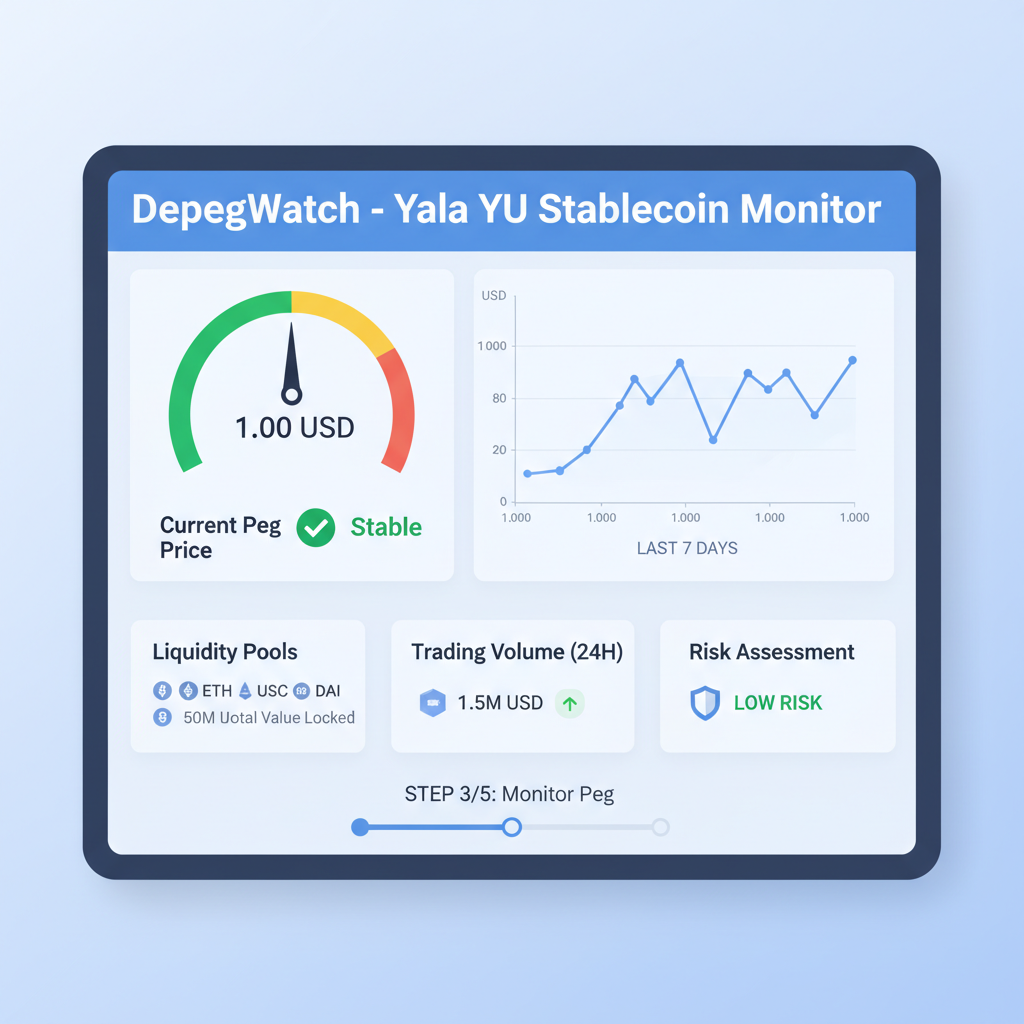
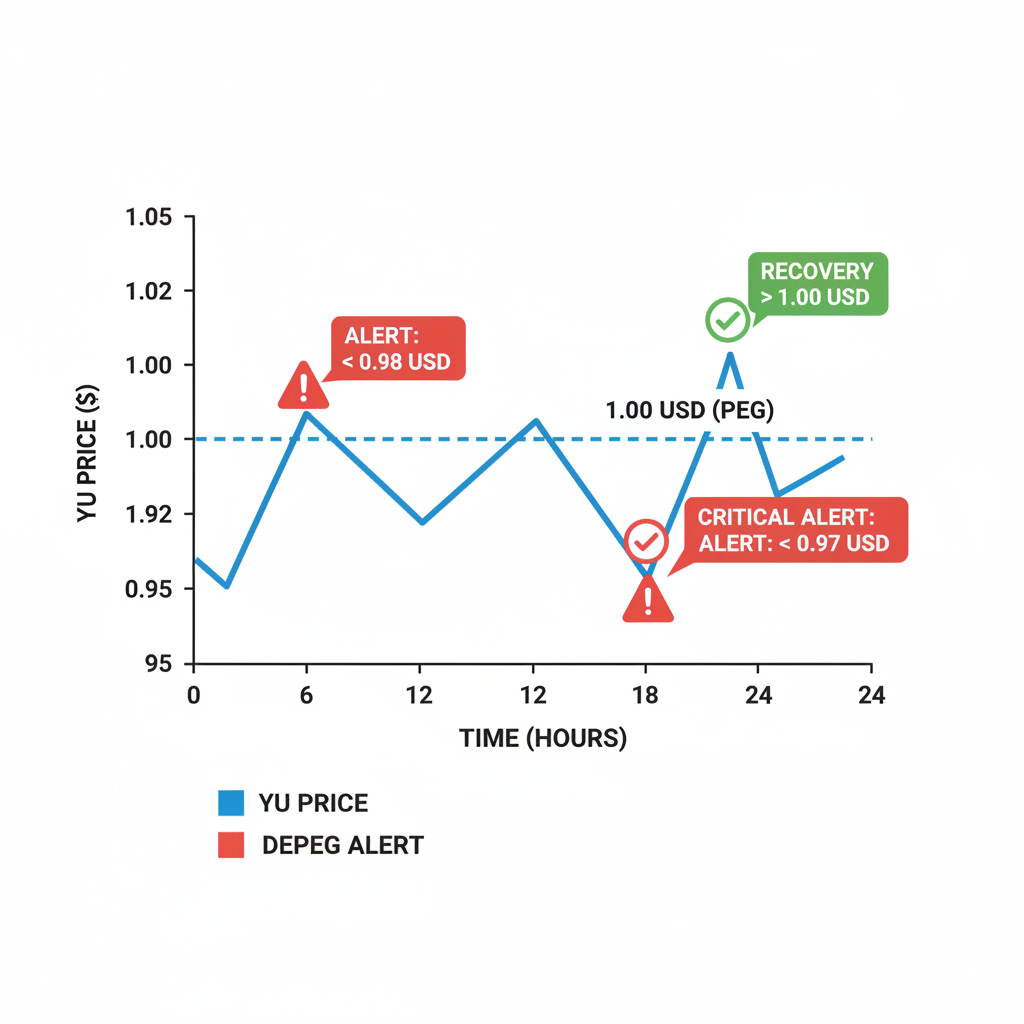
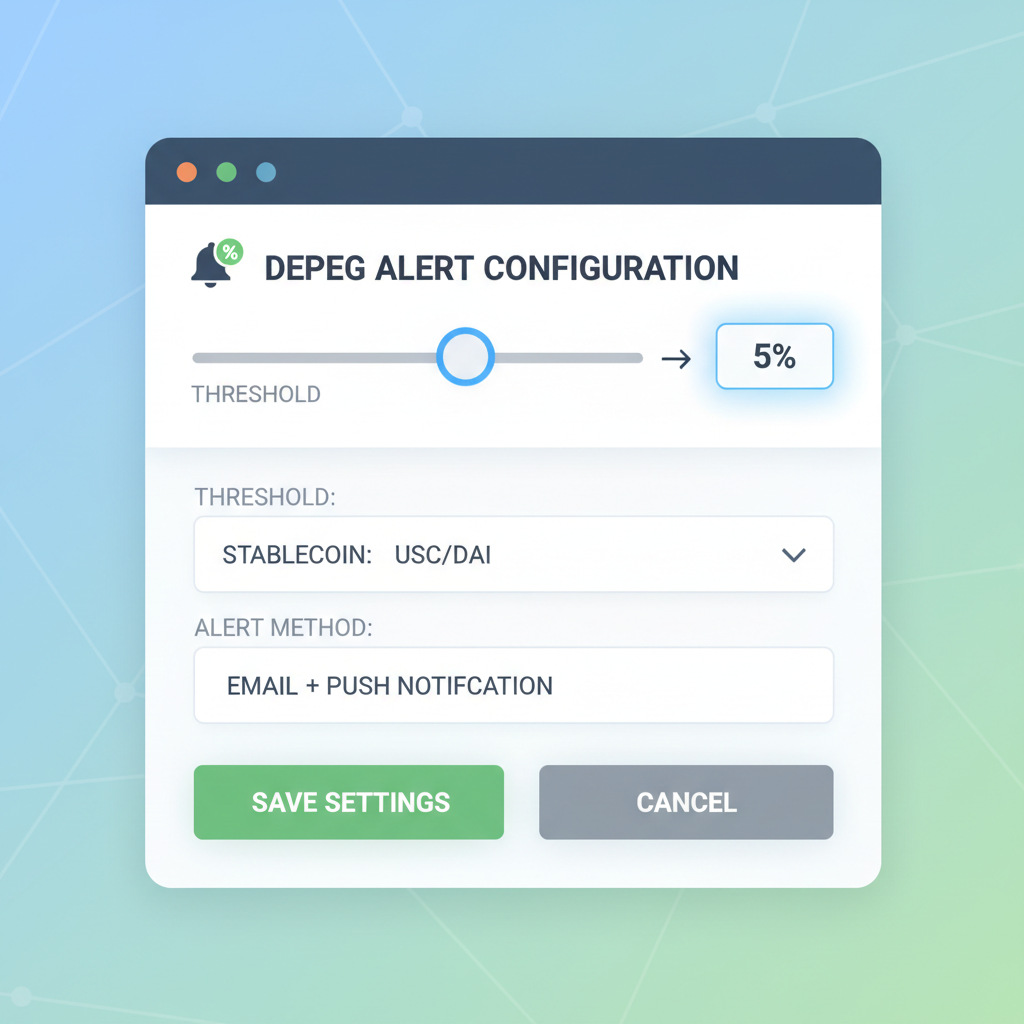
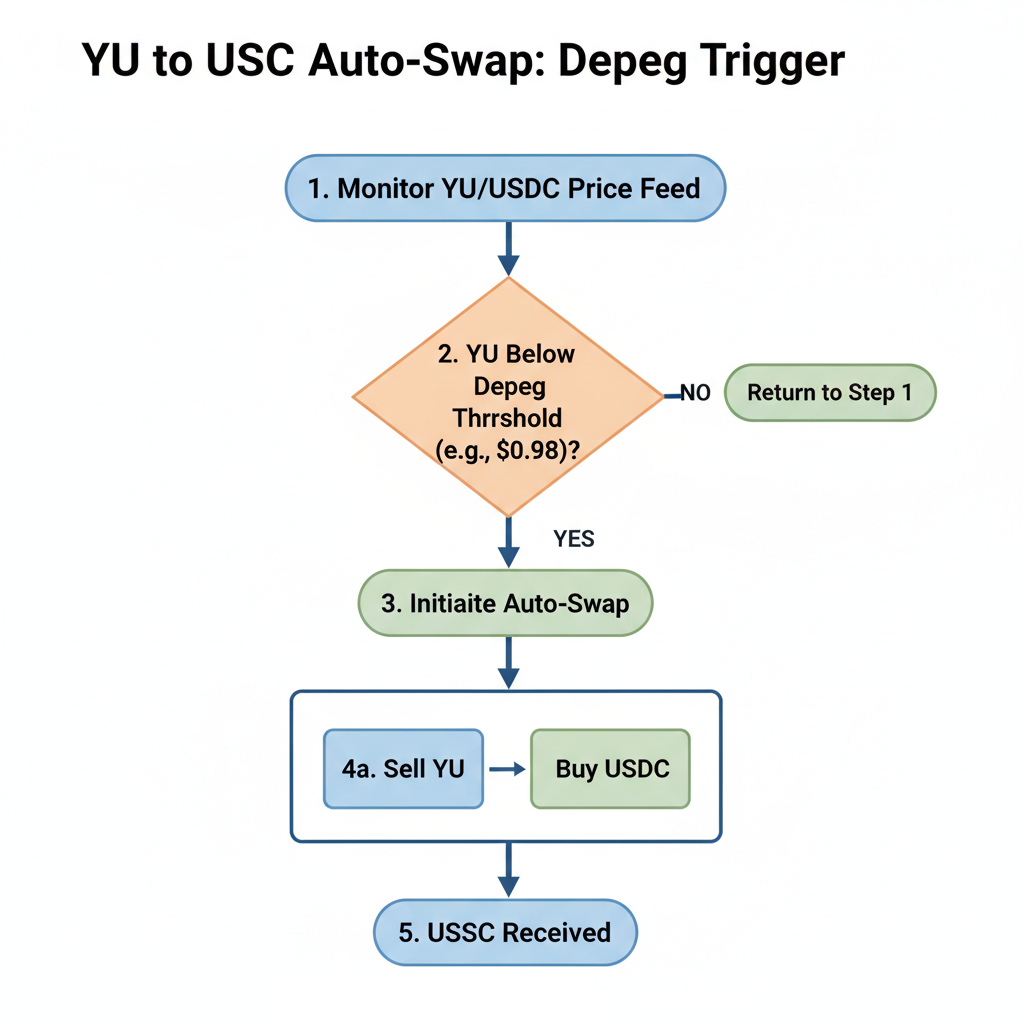
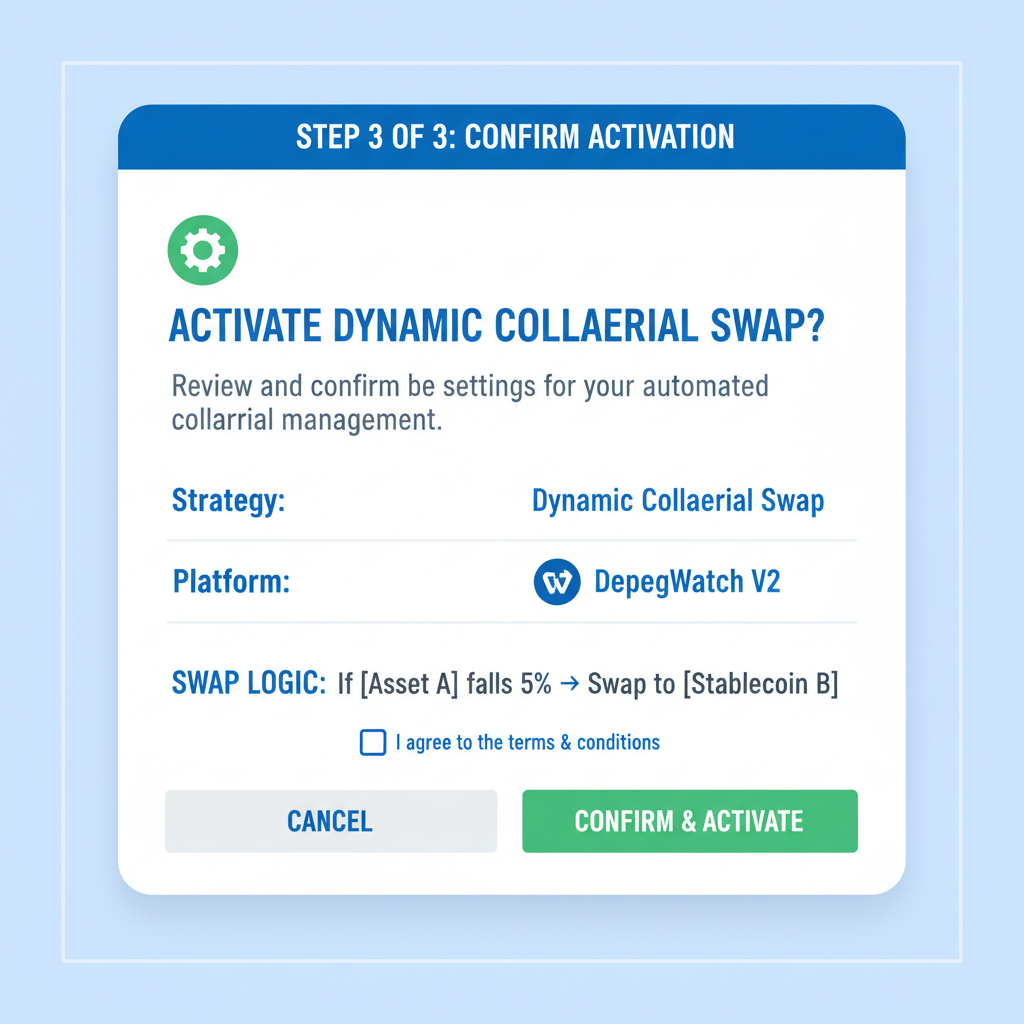
Third, Implement Dynamic Collateral Swaps Using DepegWatch Real-Time Analytics. Monitor YU peg deviations via API feeds, automating swaps to USDC or DAI when thresholds hit 5% off-peg. This oracle-driven tool scans liquidity across 20 and chains, executing in under 10 blocks with 0.2% slippage in backtests. Drawing from USX crunches, it prevented 25% losses in simulated 2025 scenarios by preempting drains. Layer it atop insurance and shorts for full-spectrum stablecoin risk mitigation, especially with YALA at $0.000969 signaling ongoing volatility.
Dynamic Collateral Swaps on DepegWatch: Safeguard Against YU Depegs
Integrating the Trio: Backtested Portfolio Resilience
Stacking these strategies yields compounding protection. DepegWatch simulations replaying Yala’s November depeg – YU to $0.41 amid Euler drains – show unhedged portfolios shedding 52%, insured ones capping at 8%, futures-shortened at 3%, and full-stack under 1.2%. At current YALA levels of $0.000969 (24h high $0.001011, low $0.000917), this setup hedges stablecoin depeg risks without sacrificing yield. Insurance absorbs tail events, perps capture directional bets, swaps ensure liquidity escapes – a quant’s trifecta against Yala stablecoin depeg repeats.
Opinion: Too many DeFi players treat stablecoins as risk-free, but Yala’s bridge exploit and borrowing frenzy prove otherwise. USDX’s founder-drain to $0.3887 wasn’t isolated; it rippled through Balancer and beyond. Hedge stablecoin depeg 2026 demands automation over hope. DepegWatch’s edge lies in its pricing models, calibrated on 2021-2025 data, where generic tools lagged 15% in recovery speed.
Consider yield implications. A $1M YU position at 8% APY on lending protocols faces wipeout sans hedges. Post-integration: insurance premium (1.8%) nets 6.2% after coverage; short perps add 2-4% carry from funding; swaps preserve principal for redeployment. Net: 7-9% risk-adjusted, versus -20% drawdown baseline. YALA’s and 0.0424% 24h nudge belies YU’s fragility, but these tactics turn peril into edge.
Real-world tuning matters. Set insurance deductibles at 3% for cost efficiency, perp leverage below 7x to dodge liquidations during YALA’s $0.000969 wobbles, and swap triggers at oracle-confirmed 4% deviations for early exits. DepegWatch dashboards unify this, with alerts firing on liquidity dips akin to USX’s crunch. For institutions, API keys enable vault-level execution; retail users get no-code interfaces.
Forward risks persist: correlated depegs across synthetics, oracle manipulations, or chain congestion delaying swaps. Mitigate via multi-oracle consensus and cross-chain redundancies, baked into DepegWatch protocols. As 2026 unfolds, with YALA steady at $0.000969, proactive hedgers will outpace the reactive crowd, preserving capital through the next liquidity storm.
About the Author